
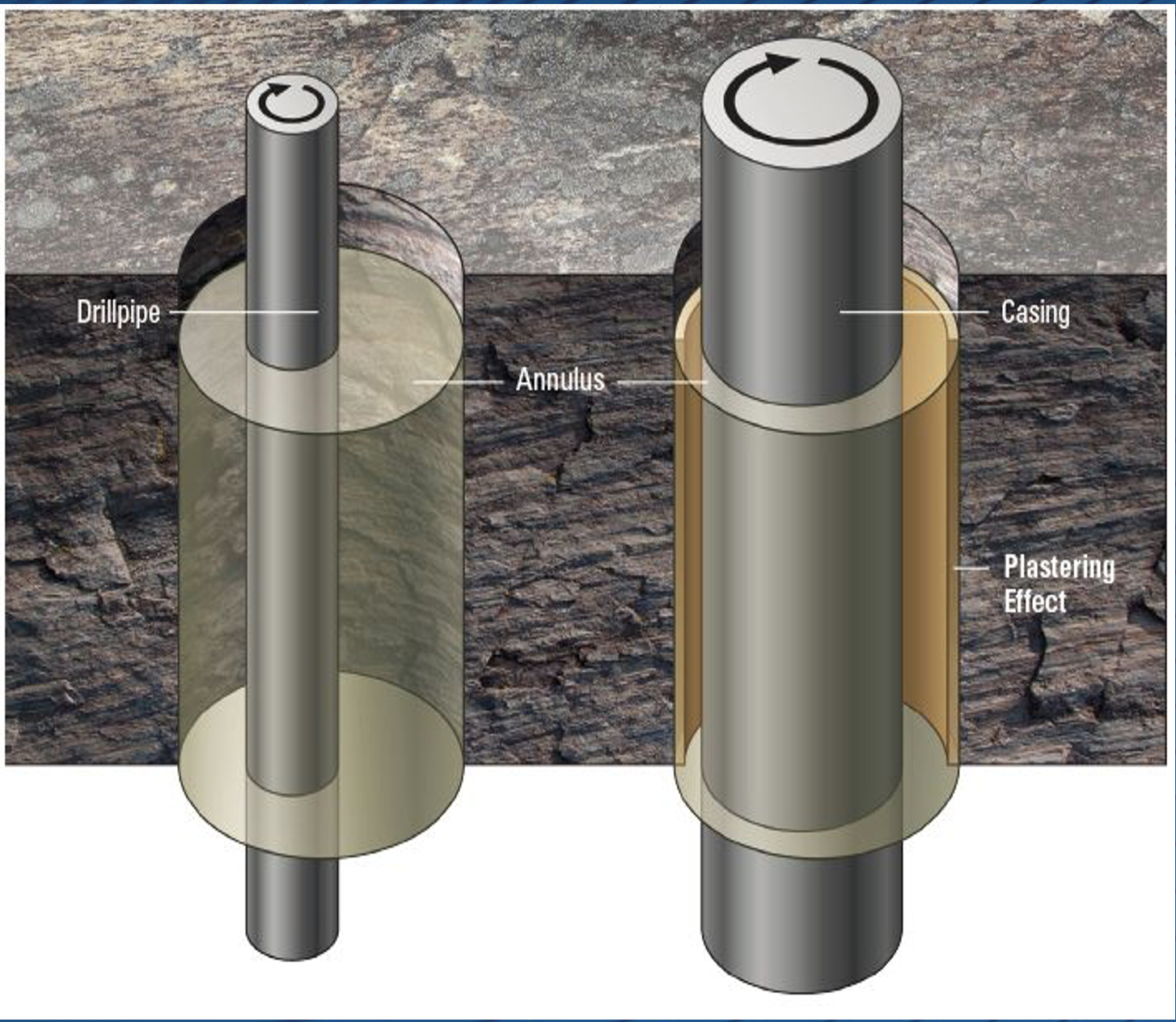
Conventional vs. Casing Drilling Geometries (Courtesy SLB)

Prevailing pore pressure / fracture gradient optimize casing design

Allows setting high-pressure conductor deeper

Allows larger tubing string, less back pressure, higher production
Subsea Drive Deepwater Value
Casing drilling value: mitigate shallow hazards
Smearing effect and narrow annulus
Higher circulating friction increases bottomhole pressure (Conventional vs. Casing Drilling Geometries)
Wellbore strengthens by plastering drilling cuttings into the formation
Casing depths based on prevailing pore-pressure / fracture gradients
Deepen the structural casing
Rapid growth of shallow fracture gradient allows deeper casing shoe for higher formation strength with higher mud densities to mitigate hazards
Less casing strings in the riserless section allow larger casing strings deeper
Mitigates loss/kick cycle
Reduces use of contingency casing strings
Larger drilling operating windows in the lower well sections
Reduced total well time — fewer hole sections and casing strings, with a single trip to drill the hole section and run casing
Decrease circulating friction, minimizing fluid-loss/kick cycle
Create opportunity for contingency casing strings
Larger hole section across well objectives
Larger completion
Increased production rates and improved economics